


What Does Affordable Mean?
In Massachusetts, affordable housing programs primarily use a framework based on the Area Median Income (AMI), as defined by the U.S. Department of Housing and Urban Development (HUD). This system categorizes households by their income relative to the median income for a specific metropolitan area or county, adjusted for household size. The general principle is that housing is considered "affordable" if it costs 30% or less of a household's gross income.
It's important to note that the specific dollar amounts for each AMI percentage vary significantly by geographic area within Massachusetts, reflecting the different costs of living across the state. These income limits are updated annually by HUD. Additionally, some programs may have asset limits in addition to income limits to ensure that assistance is directed to those with the greatest financial need.
Levels of Affordability
-
Households earning at or below 30% of AMI
This is the lowest income tier and represents individuals and families facing the most severe housing cost burdens. Programs targeting this group are crucial for preventing homelessness and providing a safety net for the most vulnerable.
-
Households earning between 31% and 50% of AMI
Many affordable housing programs, including some public housing and Section 8 voucher programs, are specifically designed to serve households within this income range.
-
Households earning between 51% and 80% of AMI
A significant portion of affordable housing units in Massachusetts is designated for lower-income households. The 80% AMI threshold is a common benchmark for many state and federal affordable housing initiatives, including those under Chapter 40B.
-
Households earning between 80% and 100% of AMI
While less common for deeply subsidized housing, some programs and initiatives, especially those involving first-time homebuyer assistance or mixed-income developments, may extend eligibility to Moderate Income households. These programs aim to support households that are priced out of market-rate housing but may not qualify for lower-income assistance.
Housing Programs
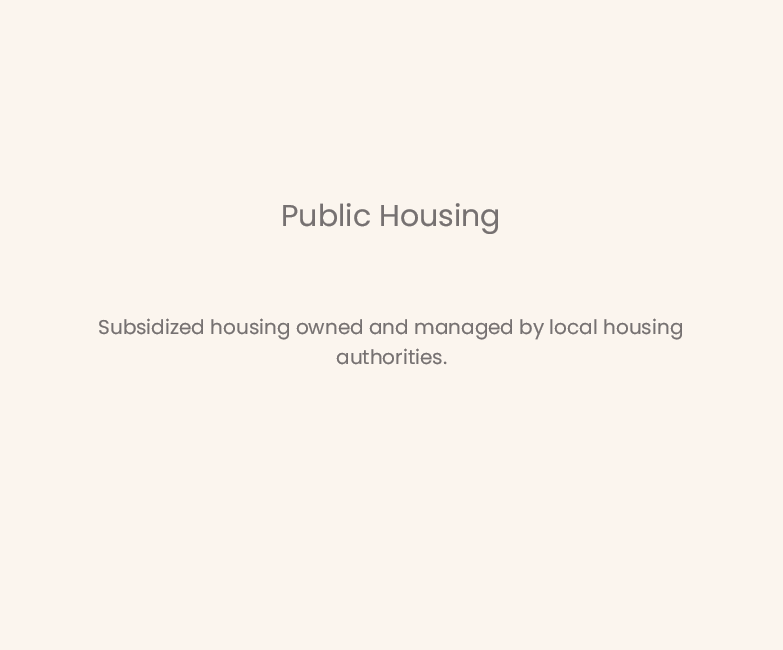
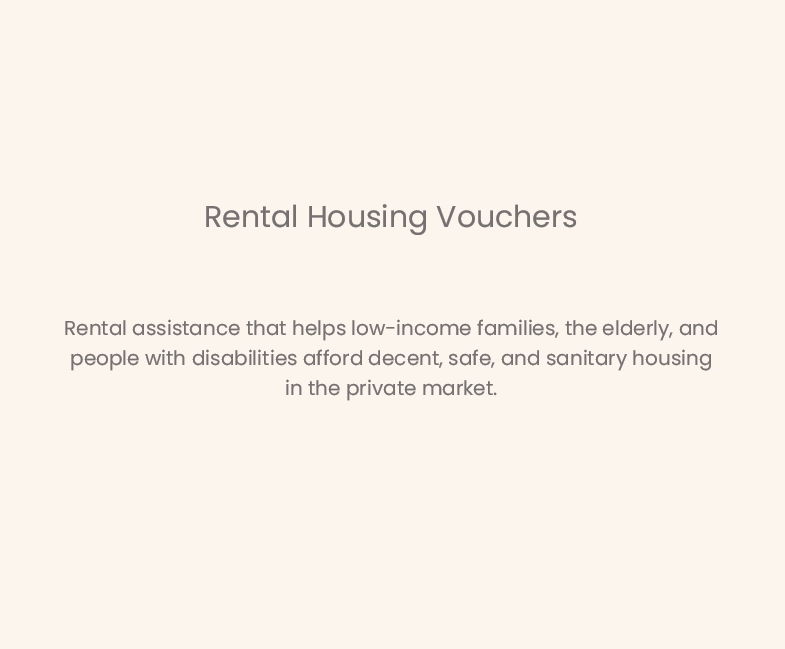
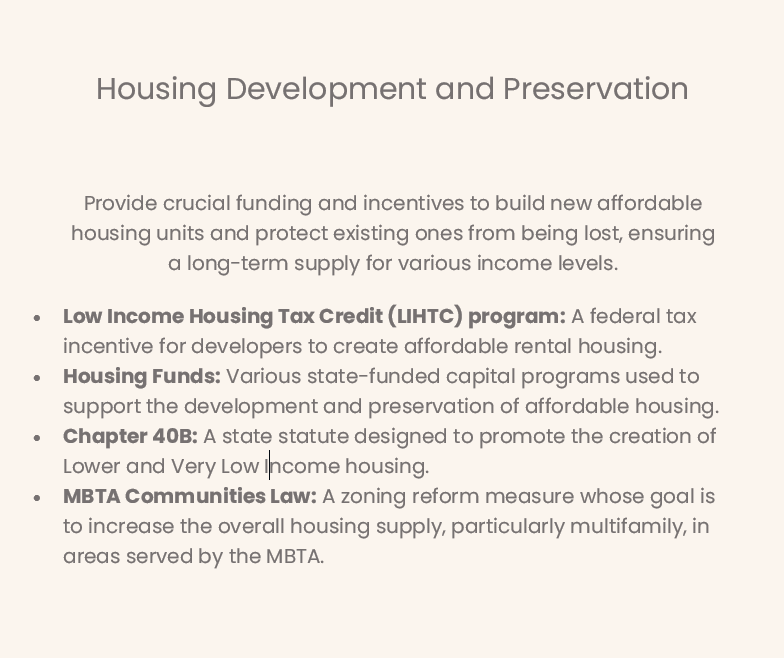
The categories and definitions of affordability levels help determine eligibility for a wide range of federal and state housing assistance programs. Each type of program is best suited to provide for one or two of the affordability levels. There is no one size fits all solution to address the need for housing. Massachusetts utilizes Federal programs as well as state level initiatives to address the housing crisis.

Use side arrows to scroll through housing programs